Buy Side vs Sell Side Financial Due Diligence
Published on 1/10/2026
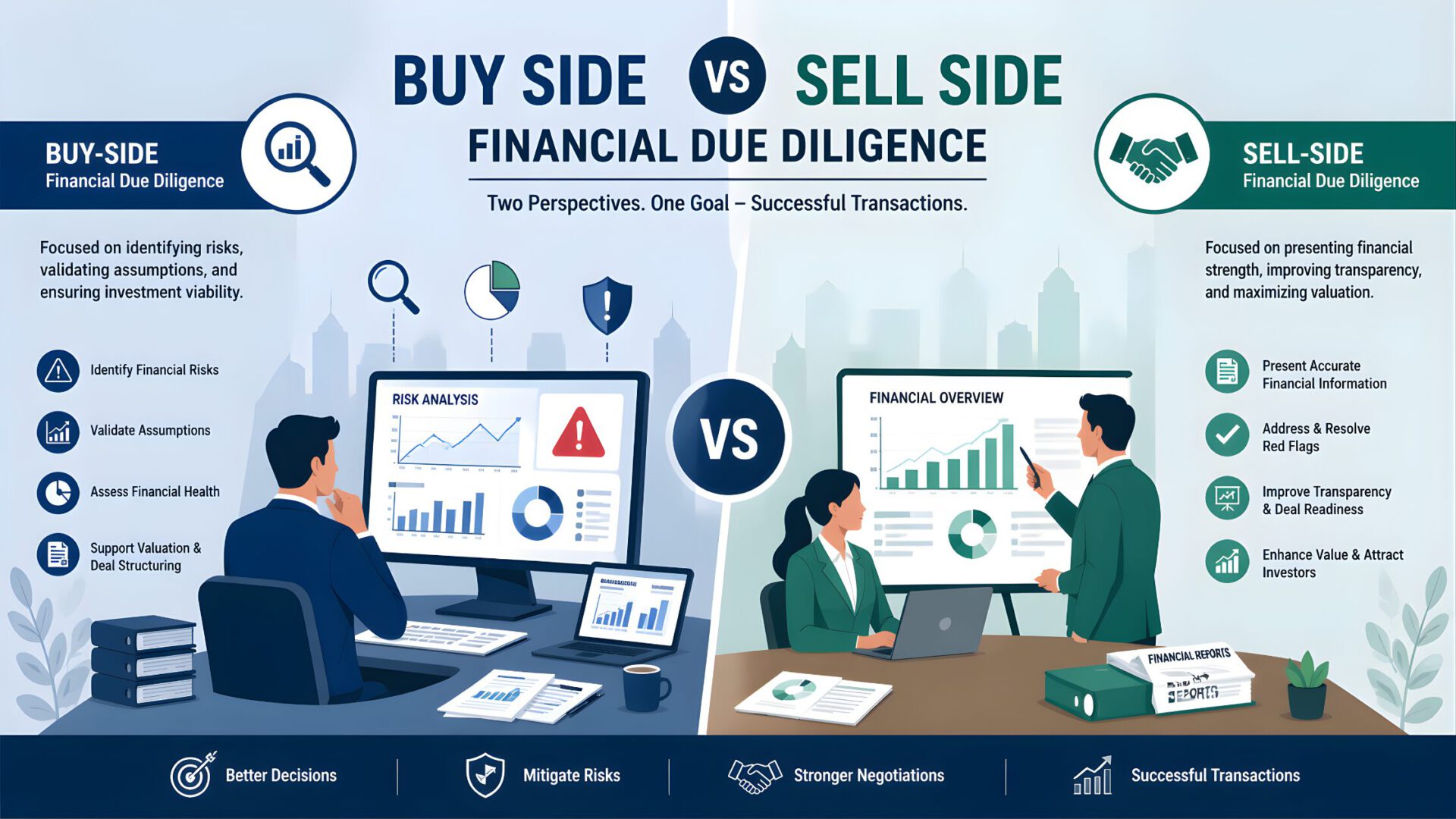
The Importance of Financial Due Diligence in Transactions
In mergers and acquisitions (M&A), understanding the difference between buy-side and sell-side financial due diligence is critical for making informed investment decisions. Financial due diligence is a structured process used to evaluate a company’s financial performance, risks, and sustainability before a transaction.
Buy-side financial due diligence focuses on identifying risks and validating investment assumptions from the investor’s perspective, while sell-side due diligence aims to present accurate and transparent financial information to maximize valuation and attract potential buyers.
In today’s complex deal environment, where transactions involve multiple stakeholders and regulatory scrutiny, effective financial due diligence in M&A helps reduce risks, improve valuation accuracy, and ensure successful deal execution.
What Is Financial Due Diligence?
Financial due diligence is a structured examination of a company’s financial performance, position, and underlying assumptions to support informed transaction decisions.
The primary objectives of the financial due diligence process include:
- Assessing financial risks and liabilities
- Validating historical and projected earnings
- Evaluating cash flows, working capital, and debt
- Supporting fair valuation and deal structuring
In financial due diligence in M&A, this process helps stakeholders move beyond surface-level financials and understand the true economic reality of the business. It ensures that decisions are based on facts rather than assumptions.
What is Buy-Side Financial Due Diligence in M&A?
Buy-side financial due diligence is conducted from the perspective of the acquirer or investor, focusing on evaluating financial risks and validating investment assumptions. Its primary purpose is to protect the buyer’s interests by identifying potential risks that could impact valuation, deal structure, or future returns.
Key focus areas include:
- Quality and sustainability of earnings
- Hidden liabilities or off-balance-sheet exposures
- Working capital adequacy and cash flow reliability
- Accounting practices and policy consistency
Buyers use the findings from due diligence advisory exercises to negotiate pricing, adjust deal terms, or restructure transaction models. The goal is not only to uncover risks but also to understand whether the investment thesis remains valid.
What is Sell-Side Financial Due Diligence?
Sell-side financial due diligence is initiated by the seller to prepare the business for scrutiny by potential investors or buyers. The sell-side due diligence process involves proactively assessing financial data, identifying potential risks, and presenting accurate, transparent information to enhance credibility and support smoother deal negotiations.
This approach focuses on:
- Presenting normalized and credible financial information
- Identifying and addressing red flags before negotiations
- Improving transparency and deal readiness
- Reducing uncertainty during buyer evaluation
By conducting sell-side reviews, companies using financial due diligence services can control the narrative, streamline negotiations, and improve transaction confidence.
Buy Side vs Sell Side Financial Due Diligence
The difference between buy-side and sell-side financial due diligence lies in their purpose and perspective. Buy-side due diligence focuses on identifying financial risks, validating assumptions, and ensuring investment viability for the buyer. In contrast, sell-side due diligence aims to present accurate, transparent, and normalized financial information to attract investors and facilitate smoother deal execution.
Buy Side vs Sell Side Financial Due Diligence: Key Differences
|
|---|
Buy Side vs Sell Side Financial Due Diligence – Quick Summary
Buy-side financial due diligence focuses on identifying risks and validating investment decisions from the buyer’s perspective, while sell-side financial due diligence focuses on preparing financial information, improving transparency, and maximizing valuation for potential investors.
When Should Companies Opt for Buy-Side or Sell-Side Due Diligence?
The choice depends on the transaction context and objectives.
Companies should opt for buy-side diligence when:
- Acquiring or investing in another business
- Evaluating minority or majority stake transactions
- Assessing financial risks before final valuation
Sell-side diligence adds value when:
- Preparing for fundraising, mergers, or exits
- Engaging multiple potential investors
- Seeking smoother and faster transaction closure
In India’s evolving deal environment, timing and preparation significantly influence outcomes, making financial due diligence services in India increasingly strategic.
Common Risks Identified Through Financial Due Diligence
Effective due diligence commonly uncovers:
- Revenue concentration or sustainability risks
- Working capital mismatches and cash flow gaps
- Accounting inconsistencies or policy weaknesses
- Compliance and reporting gaps
A structured due diligence process supports reliable financial risk assessment, helping stakeholders avoid unpleasant surprises post-transaction.
How Professional Financial Due Diligence Firms Add Value
Engaging a professional financial due diligence firm brings objectivity and expertise to transactions. These firms provide:
- Independent and unbiased financial analysis
- Deal readiness and negotiation support
- Clear, decision-focused reporting
- Enhanced credibility with investors and lenders
Professional due diligence services help translate financial data into actionable insights rather than just reports.
Choosing the Right Financial Due Diligence Partner
Selecting the right partner is critical for effective outcomes. Businesses should evaluate:
- Relevant industry and transaction experience
- Strong understanding of regulatory and accounting frameworks
- Analytical depth and reporting quality
- Ability to support deal strategy, not just compliance
Well-aligned due diligence advisory services ensure that financial reviews support transaction goals rather than slow them down.
Key Takeaways
- Buy-side financial due diligence focuses on identifying financial risks, validating assumptions, and ensuring informed investment decisions from the buyer’s perspective.
- Sell-side financial due diligence emphasizes financial transparency, data readiness, and presenting a credible business position to attract investors and support smoother deal execution.
- Understanding the difference between buy-side and sell-side financial due diligence is essential for selecting the right approach at the appropriate stage of a transaction.
- Effective financial due diligence in mergers and acquisitions helps businesses achieve accurate valuation, minimize risks, and strengthen negotiation outcomes.
- A well-structured due diligence process enhances deal confidence, reduces uncertainty, and significantly increases the chances of successful, value-driven transactions.
Conclusion: Aligning Due Diligence with Transaction Success
Understanding the difference between buy-side and sell-side financial due diligence is essential for making informed decisions in mergers and acquisitions. While buy-side due diligence focuses on identifying financial risks and validating investment assumptions, sell-side due diligence emphasizes transparency, financial readiness, and maximizing business valuation.
In today’s competitive M&A landscape, a well-executed financial due diligence process in M&A not only reduces transaction risks but also improves negotiation outcomes and deal success rates. Businesses and investors that adopt the right due diligence approach at the right stage gain a significant strategic advantage.
For organizations planning acquisitions, fundraising, or exits, leveraging professional financial due diligence services can ensure accuracy, mitigate risks, and enhance deal confidence.
👉 Looking to make smarter transaction decisions? Partner with experienced financial due diligence experts to maximize value and minimize risk.
📌 Frequently Asked Questions (FAQs)
1. What is financial due diligence, and why is it important?
Financial due diligence is a detailed review of a company’s financial health, performance, and risks before a transaction. It ensures accurate valuation, identifies liabilities, and supports informed decision-making.
2. What is the difference between buy-side and sell-side financial due diligence?
Buy-side due diligence focuses on identifying risks for investors, while sell-side due diligence prepares financial data to enhance transparency and attract buyers.
3. When is financial due diligence required in M&A transactions?
It is required during mergers, acquisitions, investments, fundraising, and exit planning to assess financial performance and validate deal assumptions.
4. When should a company hire a financial due diligence firm?
Companies should hire a due diligence firm when planning acquisitions, fundraising, or exits, especially for high-value or complex transactions.
5. How do financial due diligence services add value to a deal?
They provide risk identification, financial validation, negotiation support, and improve deal credibility while reducing post-transaction surprises.
6. What should businesses look for in a financial due diligence advisory partner?
Businesses should evaluate industry expertise, M&A experience, regulatory knowledge, and the ability to provide actionable insights.
7. What are the key steps in the financial due diligence process in M&A?
The process includes data collection, financial analysis, earnings validation, risk assessment, and final reporting.
8. What documents are required for financial due diligence in M&A?
Required documents include financial statements, tax returns, bank records, contracts, debt agreements, and management reports.
9. What is the cost of financial due diligence in India?
The cost ranges from ₹5 lakh to ₹50 lakh or more, depending on deal size, complexity, and scope.
10. Who performs financial due diligence in M&A?
It is conducted by investment bankers, chartered accountants, and financial advisory firms.
11. What are common financial due diligence red flags in M&A?
Red flags include inconsistent revenue, hidden liabilities, weak cash flow, accounting issues, and compliance gaps.
12. How long does financial due diligence take in M&A transactions?
It typically takes 2 to 6 weeks, depending on transaction size and data availability.
13. What is the difference between financial and legal due diligence?
Financial due diligence evaluates financial performance, while legal due diligence focuses on contracts, compliance, and legal risks.
14. Why is financial due diligence important for investors?
It helps investors assess risks, validate business performance, ensure fair valuation, and make confident investment decisions.